
Corrected Age Calculator for Premature Babies
Babies born before their expected due date may reach developmental milestones according to a different timeline than babies born at full term. For this reason, parents and healthcare professionals may use corrected age when discussing a premature baby’s development. A corrected age calculator helps estimate this age by adjusting the baby’s chronological age according to how early the baby was born.
This guide explains what corrected age means, how it is calculated, when parents may use it, and why corrected age should be interpreted alongside guidance from a qualified healthcare professional.
What Is Corrected Age?
Corrected age, also called adjusted age, is an age calculation commonly used for babies who were born prematurely. Instead of looking only at the number of weeks or months since birth, corrected age considers how many weeks early the baby was born.
For example, a baby born several weeks before the expected due date may have a chronological age that is greater than their corrected age. The corrected age provides an additional way to understand developmental progress during the early months and years.
Important: Corrected age is a developmental reference rather than a diagnosis. Babies develop at different rates, so individual development should always be discussed with a qualified pediatric healthcare professional when there are concerns.
Chronological Age vs Corrected Age
Understanding the difference between chronological age and corrected age is important when using a premature baby age calculator.
Chronological Age
Chronological age is the amount of time that has passed since the baby’s actual date of birth. For example, if a baby was born three months ago, the baby’s chronological age is three months.
Corrected Age
Corrected age adjusts the chronological age based on the number of weeks before the expected due date that the baby was born.
Therefore, a premature baby can have one chronological age and a younger corrected age at the same time.
How Is Corrected Age Calculated?
A common calculation starts with the baby’s chronological age and subtracts the number of weeks the baby was born early.
The basic concept can be represented as:
Corrected Age = Chronological Age − Weeks Born Early
To estimate how many weeks early the baby was born, the baby’s gestational age at birth is compared with a full-term reference of approximately 40 weeks.
Therefore:
Weeks Born Early = 40 − Gestational Age at Birth
For example, if a baby was born at 32 weeks of gestation, the baby was approximately 8 weeks early compared with a 40-week reference.
If that baby is now 16 weeks old chronologically, a simple corrected-age calculation would be approximately:
16 weeks − 8 weeks = 8 weeks corrected age
This is a simplified educational example. Healthcare professionals may consider the baby’s individual history and developmental context when interpreting age and milestones.
What Information Do You Need?
A corrected age calculator generally requires a few important pieces of information.
- Date of birth: The baby’s actual birth date.
- Gestational age at birth: The number of completed weeks of pregnancy at birth.
- Calculation date: The date on which you want to determine the baby’s age.
- Expected full-term reference: A commonly used reference is around 40 weeks of gestation.
Accurate dates matter because even a small difference can affect the calculated chronological or corrected age.
How to Calculate a Premature Baby’s Corrected Age
You can follow these simple steps to understand the calculation.
- Find the baby’s date of birth. Record the exact day, month, and year.
- Find the gestational age at birth. This is usually recorded in weeks and days in the baby’s medical records.
- Calculate the number of weeks early. Compare the gestational age at birth with the full-term reference.
- Calculate chronological age. Determine how much time has passed since the actual birth date.
- Subtract the weeks born early. This provides an estimated corrected age.
Why Is Corrected Age Used for Premature Babies?
Premature babies may have had less time in the womb to develop before birth. As a result, comparing their development only with babies of the same chronological age may not always provide the most useful context during early development.
Corrected age can provide an additional reference when considering developmental milestones. It helps account for the difference between the baby’s actual birth date and the expected full-term date.
This does not mean every premature baby follows exactly the same developmental schedule. Individual differences are normal, and healthcare professionals consider many factors when evaluating development.
When Should Corrected Age Be Used?
Corrected age is most commonly discussed during the early years of a premature child’s development. The exact period for using corrected age can vary depending on the child’s circumstances and professional guidance.
Parents should therefore avoid treating a calculator result as a medical assessment. Instead, corrected age can serve as a helpful reference when discussing developmental progress with a pediatrician or other qualified healthcare professional.
Corrected Age and Developmental Milestones
Developmental milestones can include areas such as movement, communication, learning, and social interaction. Premature babies may reach these milestones at different times.
Corrected age can provide useful context when a healthcare professional evaluates developmental progress. However, milestone development is not a race, and one calculation should never be used to judge a child’s overall health or development.
If you have concerns about a baby’s development, feeding, movement, communication, or other health-related changes, speak directly with a qualified healthcare professional.
Corrected Age Example
Consider a simplified example of a baby born at 32 weeks of gestation. Compared with a 40-week reference, the baby was approximately 8 weeks early.
Suppose the baby is now 20 weeks old according to the actual birth date. The approximate corrected age would be:
20 weeks chronological age − 8 weeks early = 12 weeks corrected age
The result provides an approximate corrected age of 12 weeks.
This example is intended to explain the calculation method rather than provide medical guidance for an individual child.
Corrected Age in Months
Parents often think about a baby’s age in months rather than weeks. Converting between weeks and months can be less precise because calendar months do not all contain the same number of days.
For this reason, keeping the original dates and gestational age available can provide a more reliable basis for calculations than relying only on an approximate month conversion.
If you need to calculate a baby’s general chronological age from a date of birth, you can use our Age Calculator .
Corrected Age vs Actual Age
Corrected age does not replace chronological age. Instead, the two numbers describe different aspects of the baby’s age.
- Chronological age: Time passed since the actual date of birth.
- Corrected age: Chronological age adjusted for premature birth.
- Gestational age: The estimated length of pregnancy at the time of birth.
Keeping these concepts separate makes it easier to understand why a premature baby can have different chronological and corrected ages.
Corrected Age and Age Calculations
Date-based calculations can become complicated when they involve different months, leap years, weeks, and days. A standard age calculator can help determine chronological age from a complete date of birth.
For comparisons between two people’s ages, you can also explore our Age Difference Calculator if that page is available on your site.
The important distinction is that a general age calculator calculates chronological age, while corrected age requires additional information about gestational age at birth.
Common Mistakes When Calculating Corrected Age
Using Only the Birth Year
Using only the year of birth does not provide enough information for an accurate age calculation. The exact day and month can affect the result.
Ignoring Gestational Age
Corrected age depends on how early the baby was born. Without gestational age, you cannot properly estimate the adjustment.
Confusing Chronological and Corrected Age
These are different measurements. Chronological age comes directly from the birth date, while corrected age includes an adjustment for premature birth.
Treating the Calculator as a Medical Diagnosis
A calculator performs a mathematical adjustment. It cannot evaluate a child’s health, development, or individual medical needs.
Why Accurate Dates Matter
Date accuracy is important for any age calculation. The complete birth date provides the starting point, while the calculation date determines how much time has passed.
Our Age Calculator can calculate age using a complete date of birth and a selected calculation date. This can be useful when you need chronological age for comparison with a corrected-age calculation.
Corrected Age for Parents: A Simple Approach
Parents can keep the calculation simple by remembering three pieces of information: the baby’s birth date, gestational age at birth, and the date on which the calculation is being made.
First, calculate chronological age. Next, determine how many weeks early the baby was born. Finally, subtract that adjustment from chronological age.
This gives a straightforward estimate that can help parents understand the concept of corrected age.
Frequently Asked Questions
What is a corrected age calculator?
A corrected age calculator estimates a premature baby’s adjusted age by considering the baby’s chronological age and how many weeks early the baby was born.
What is the difference between chronological age and corrected age?
Chronological age measures time since the actual birth date. Corrected age adjusts that age based on premature birth and the number of weeks the baby was born before a full-term reference.
How do I calculate corrected age for a premature baby?
Calculate the baby’s chronological age, determine the number of weeks the baby was born early, and subtract those weeks from the chronological age.
What gestational age is considered premature?
Premature birth generally refers to birth before 37 completed weeks of pregnancy. The exact gestational age should be taken from the baby’s medical records or healthcare professional.
Can I calculate corrected age in months?
Yes, but month-based calculations can be approximate because calendar months contain different numbers of days. Weeks and exact dates can provide a more consistent reference.
Does corrected age mean my baby’s actual age is different?
No. The baby’s chronological age remains based on the actual birth date. Corrected age is an adjusted reference used to provide additional context during early development.
How long is corrected age used?
The period during which corrected age is useful can vary. Parents should follow the guidance of their pediatrician or other qualified healthcare professional for their individual child.
Can an age calculator determine corrected age automatically?
A standard age calculator can determine chronological age from dates, but a corrected-age calculation also requires information about gestational age at birth and the number of weeks born early.
Related Age Calculators and Guides
After calculating corrected age, you may also find these resources useful:
- Age Calculator — Calculate chronological age from a complete date of birth.
- Age Difference Calculator — Compare the age difference between two dates of birth.
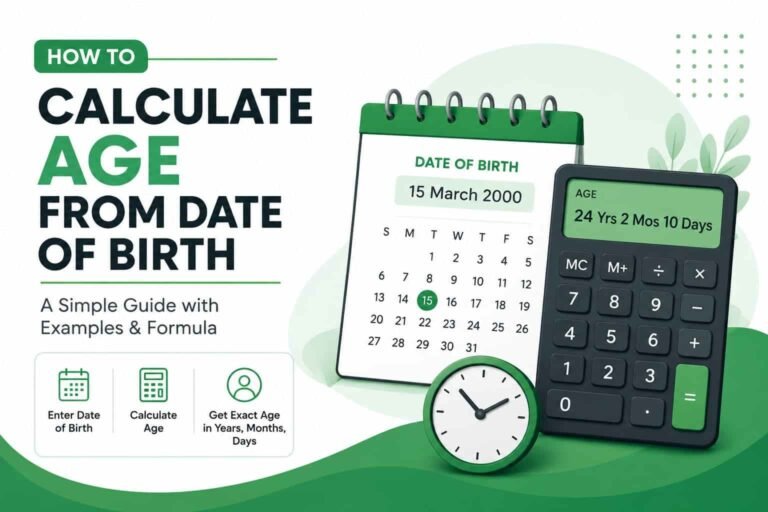
- How to Calculate Age from Date of Birth — Learn how date of birth is used for age calculations.
- What Is an Age Calculator? — Understand how online age calculators work.
- Birthday Facts by Date — Explore additional date and birthday information.
Final Thoughts
A Corrected Age Calculator for Premature Babies provides a simple way to understand the difference between chronological age and corrected age. The calculation considers the baby’s actual age and adjusts it according to how early the baby was born.
Corrected age can be useful as a developmental reference, especially when discussing milestones during early childhood. However, every child develops differently, so calculator results should not replace professional medical assessment.
For general chronological age calculations, start with the Age Calculator and use the baby’s complete date of birth. For questions about development or health, consult a qualified pediatric healthcare professional.