Years Between Dates Calculator
The Years Between Dates Calculator helps you find the exact number of years between two dates. Whether you want to measure the time between two birthdays, calculate the duration between important events, or understand the difference between past and future dates, comparing two complete dates gives you a more precise result than simply subtracting the years.
A date difference can include complete years, remaining months, and additional days. Therefore, the result can provide a clearer picture of the actual time that has passed between two calendar dates.
What Is a Years Between Dates Calculator?
A Years Between Dates Calculator is a date calculation tool that determines the amount of time separating two calendar dates. Depending on the dates entered, the result can be expressed in complete years or as a combination of years, months, and days.
For example, if you want to know how much time passed between a person’s birth date and a particular milestone, comparing the two dates can provide a more accurate result than looking at the years alone.
The calculation becomes especially useful when the two dates do not fall on the same month and day. In those situations, simply subtracting one year from another may produce an incomplete result.
How Does the Years Between Dates Calculation Work?
The basic idea is simple: the calculator compares a starting date with an end date and determines the calendar interval between them.
The calculation considers the day, month, and year of both dates. This matters because months have different numbers of days, and leap years add an extra day to February.
For example, the period from January 15, 2020 to January 15, 2025 represents exactly five years because both dates have the same month and day.
However, when the starting and ending dates have different months or days, the result may contain complete years plus additional months and days.
Years Between Two Dates Example
Suppose the starting date is 10 March 2015 and the ending date is 10 March 2025.
Because the day and month are identical, the difference is exactly 10 years.
Now consider a starting date of 10 March 2015 and an ending date of 25 June 2025. In this case, the result is more than 10 complete years because several additional months and days have passed after the tenth anniversary.
This demonstrates why complete date information is important when calculating the exact interval between two dates.
Years Between Dates vs. Simple Year Subtraction
Subtracting one year from another can provide a quick estimate, but it does not always represent the complete time interval.
For example, if one date is in December 2010 and another date is in January 2020, subtracting the years gives 10. However, the actual elapsed period is only slightly more than nine years.
A proper date calculation checks the complete calendar dates instead of looking at the year numbers alone.
This is why a date calculator is useful when accuracy matters.
Years, Months, and Days Between Dates
Many date calculations are easier to understand when the result is divided into years, months, and days.
- Years: Complete calendar years between the dates.
- Months: Additional complete months after the full years.
- Days: Remaining days after accounting for complete years and months.
This format provides more detail than a result expressed only as a decimal number of years.
For example, a period could be described as 7 years, 4 months, and 12 days instead of converting the entire period into an approximate decimal value.
Why Leap Years Matter
Leap years are important when calculating the difference between dates because a leap year contains 366 days instead of the usual 365 days.
Under the Gregorian calendar, a year is generally a leap year when it is divisible by four. Century years follow an additional rule: they must also be divisible by 400 to qualify as leap years.
As a result, 2000 was a leap year, while 1900 was not.
A date calculator automatically needs to account for these calendar rules when determining an accurate interval between two dates.
How to Calculate Years Between Dates
You can calculate the interval between two dates by following a few simple steps.
- Choose the starting date.
- Choose the ending date.
- Enter the day, month, and year for both dates.
- Compare the two complete dates.
- Read the resulting years, months, and days.
If you want to calculate age from a birth date instead of comparing two arbitrary dates, you can use our Age Calculator to calculate age in years, months, and days.
When Should You Use a Years Between Dates Calculator?
A date interval calculator can be useful in many everyday situations.
1. Calculate Time Between Birthdays
You can compare two birthdays to determine the exact difference between them. This can be useful when you want to know the age gap between two people.
For a dedicated comparison, use the Age Difference Calculator to calculate the difference between two people’s ages.
2. Calculate the Duration of a Project
Businesses, students, and individuals can compare project start and end dates to determine how long a project lasted.
3. Measure Time Between Important Events
You can compare dates related to education, employment, travel, family events, or other milestones.
4. Calculate Historical Time Intervals
Researchers and students can compare historical dates to understand how much time passed between important events.
5. Check Future Dates
You can also compare today’s date with a future date to determine how many years remain until an upcoming milestone.
Years Between Dates for Age Calculations
Age calculation is one of the most common reasons people compare two dates. A person’s birth date provides the starting point, while the current date or another selected date becomes the ending point.
For example, if someone was born on 20 July 2000, you can compare that birth date with any later date to determine their age at that specific point in time.
Our Date of Birth Calculator can also help when you need to work with birth-date information.
If you already know someone’s age and want to estimate or determine their birth date, a date-of-birth tool can provide a useful starting point.
Years Between Dates in Past and Future
A date difference calculation does not have to involve today’s date. You can compare two historical dates or two future dates as long as both dates are valid calendar dates.
For example, you might compare a past event with another past event to find the elapsed time between them. Similarly, you can compare two future milestones to understand the planned interval.
Our main Age Calculator also allows age calculations on a selected date, making it useful for understanding age at a particular point in time.
Difference Between Years and Total Days
There is an important distinction between calculating calendar years and counting total days.
A calendar result may say that two dates are separated by a certain number of years, months, and days. A total-day calculation instead counts every day in the interval.
These two approaches answer slightly different questions.
For example, a period spanning several years may contain a different total number of days depending on how many leap years occur during the interval.
Therefore, choose the calculation format that matches the information you actually need.
Years Between Dates vs. Months Between Dates
Years are useful for understanding long-term intervals, while months can be more practical for shorter periods.
If your dates are separated by less than a few years, you may want to express the result primarily in months and days.
For longer intervals, years and remaining months can make the result easier to understand.
The best format depends on your purpose and the precision you need.
Years Between Dates vs. Days Between Dates
Days provide a direct measure of the number of calendar days in an interval. Years provide a calendar-based representation that is easier to understand for long periods.
For example, saying “10 years” is generally more intuitive than saying “3,652 days,” although the exact number of days depends on the dates and leap years involved.
When you need an exact day count, use a dedicated date-difference calculation rather than converting years into days using a fixed 365-day assumption.
How Accurate Is a Years Between Dates Calculator?
A date calculator can provide a precise result when you enter valid and complete dates and the calculation follows established calendar rules.
Accuracy depends on correctly handling month lengths, leap years, and the relationship between the starting and ending dates.
For this reason, automated date calculations are often more reliable than manual calculations when the interval is long or crosses multiple leap years.
Common Mistakes When Calculating Years Between Dates
Using Only the Birth Years
One common mistake is subtracting the birth year from the current year without checking whether the birthday has already occurred.
The month and day can change the final age result.
Ignoring Leap Years
Another mistake is assuming every year contains exactly 365 days. Leap years add an additional calendar day and can affect total-day calculations.
Confusing Calendar Years With Elapsed Time
Two dates can have year numbers that differ by 10 while the actual elapsed period is less than or greater than exactly 10 years.
Entering an Incorrect Date
Even a small error in the day, month, or year can change the result. Always double-check both dates before calculating.
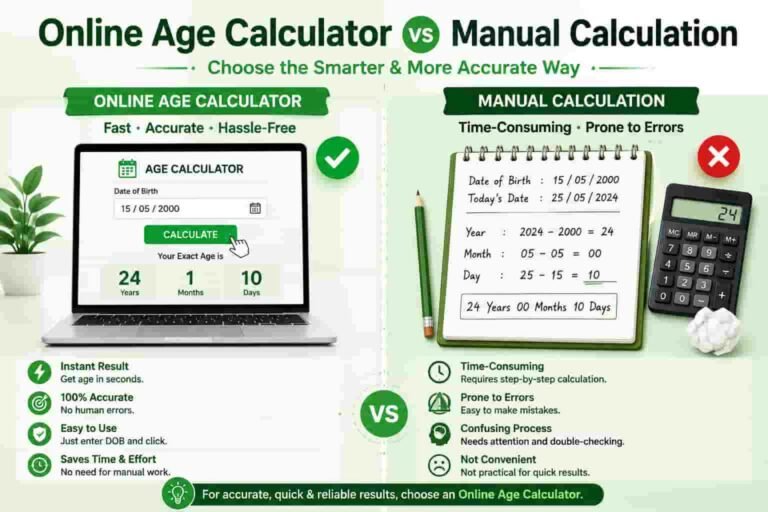
Manual Method for Finding Years Between Dates
For simple date pairs, you can calculate the difference manually.
First, compare the years. Then check whether the ending month and day have reached the same point in the calendar relative to the starting date.
If the ending date has not yet reached the anniversary of the starting date, subtract one from the initial year difference.
After determining the complete years, calculate the remaining months and days if you need a more detailed result.
However, manual calculations become more difficult when the dates cross February 29, different month lengths, or several calendar years.
For a faster calculation, use an online date or age calculator.
Related Date and Age Calculations
Different situations require different date calculations. Our Age Calculator is useful for calculating age from a date of birth, while the Age Difference Calculator is useful for comparing two people’s ages.
If you need to determine a birth date from an age, the Date of Birth Calculator can help you work with that type of calculation.
You can also explore our Past How Old Am I Calculator to understand how old someone was at an earlier point in time.
For future age planning, our Future How Old Will I Be Calculator can help you determine a person’s age on a future date.
Frequently Asked Questions
How do I calculate years between two dates?
Enter the starting date and ending date into a date calculator. The tool compares the complete dates and determines the number of complete years and, when applicable, the remaining months and days.
Can I calculate years between dates without today’s date?
Yes. You can compare any two valid dates. The calculation does not have to use today’s date.
Is subtracting two years enough to find the exact difference?
No. Subtracting the year numbers gives only a basic estimate. The month and day of each date must also be considered for an exact calendar interval.
Why do leap years matter?
Leap years contain an extra day in February. Therefore, they can affect total day calculations and the exact interval between two dates.
Can I calculate the age between two dates?
Yes. A person’s age is essentially the calendar interval between their date of birth and a selected date. You can use our Age Calculator for this purpose.
What is the difference between years and total days?
Years describe the calendar interval in a human-friendly format, while total days count the individual calendar days in the interval. The exact day count can vary because of leap years.
Can I calculate future years between dates?
Yes. A date calculator can compare future dates just as it can compare past dates, provided the dates are valid.
Conclusion
The Years Between Dates Calculator provides a convenient way to understand the time interval between two calendar dates. Instead of relying only on the difference between year numbers, a complete calculation considers the day, month, year, month lengths, and leap-year rules.
Whether you are comparing birthdays, measuring the duration of an event, planning a future milestone, or studying historical dates, using complete calendar dates gives you a more meaningful result.
For accurate age-related calculations, you can start with our Age Calculator and then use the related date tools available on Age Calculator.