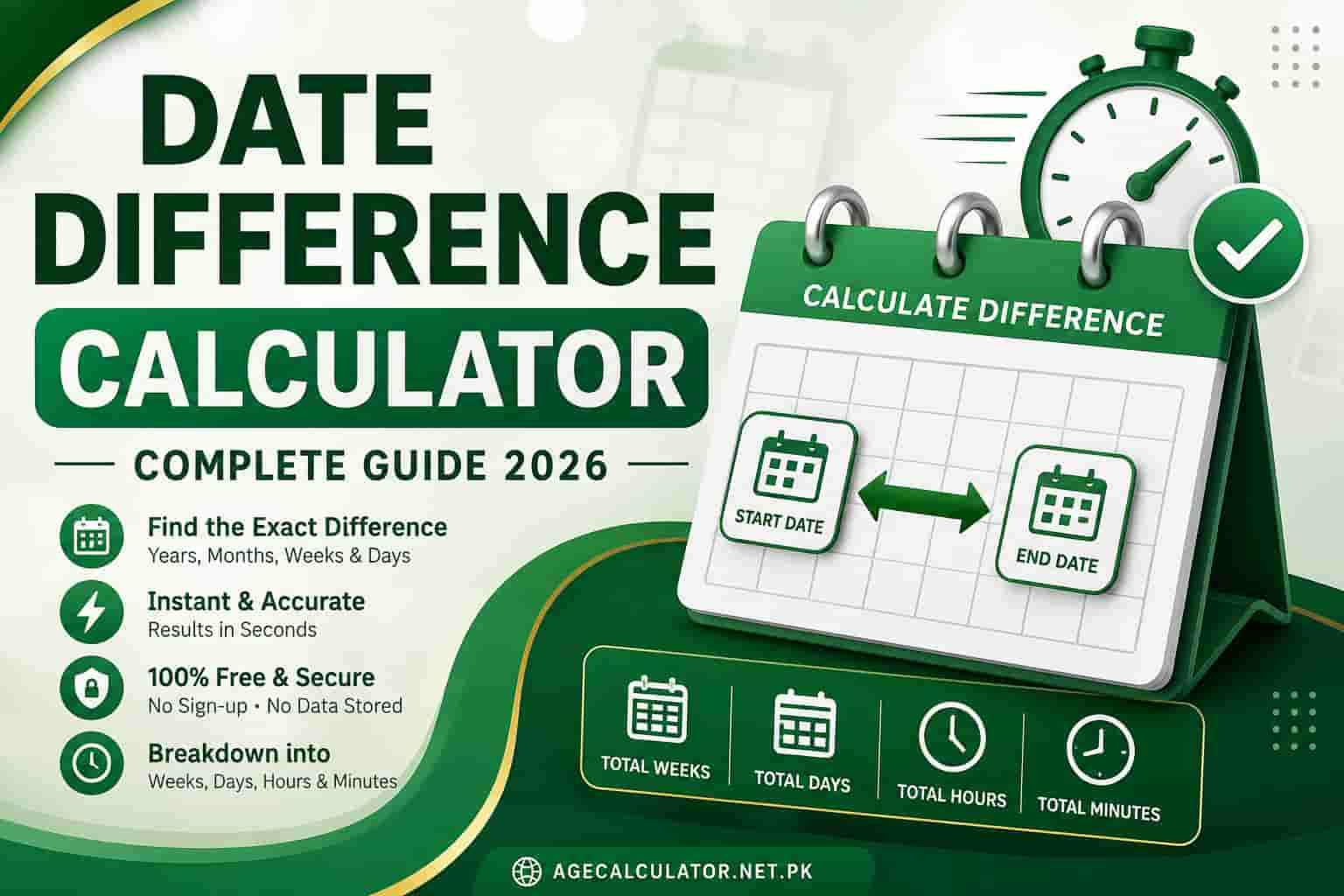
Date Difference Calculator
Compare two dates as completed years, months and days, alongside the total elapsed day count. Calendar units are useful for a period described by anniversaries, while total days are useful for an elapsed-duration record.
Use the Date Difference Calculator
How the calculation works
Dates are compared as Gregorian calendar dates at UTC midnight, avoiding daylight-saving errors in the day count. The end date must not precede the start date. Calendar-month results use monthly anniversaries clamped to the final valid day when a shorter month does not contain the original day number.
Worked example
From 1 January 2026 to 10 February 2026, the calendar interval is 0 years, 1 month and 9 days; the elapsed interval is 40 days.
Choose the right unit
Elapsed days, complete weeks and completed months answer different questions. A period can contain 40 elapsed days, five complete weeks plus five days, and a calendar month plus remaining days. Keep the original dates with the result so someone else can check the convention.
Common date-entry mistakes
Use the date picker to avoid confusing day/month and month/day formats. Verify which date starts the interval and which ends it. Identical dates produce zero elapsed time. If you are counting occupied dates rather than elapsed time, use the inclusive result on the days page.
Important limitations
This tool counts dates, not precise elapsed hours between local timestamps. A contract, payroll system or institution may use a different inclusive-day or month-end convention. Confirm the rule you need. Use the Business Days Calculator when weekends and custom holiday exclusions matter.
Frequently asked questions
Are weekends removed?
No. All calendar days count; business-day exclusions belong in the separate business-days tool.
Why can calendar months differ from days divided by 30?
Months have different lengths. This tool counts completed monthly anniversaries rather than fixed 30-day blocks.




One Comment